
Coffee knowledge · Real-life English · Level: Intermediate
Australian-Grown Coffee: Where Do the Beans Come From?
Australians drink a lot of coffee, but where is it grown? Learn the key facts about Australian-grown coffee and the English you need to ask where your beans come from.
Published 15/11/2026 · Educational guide
What you need to know
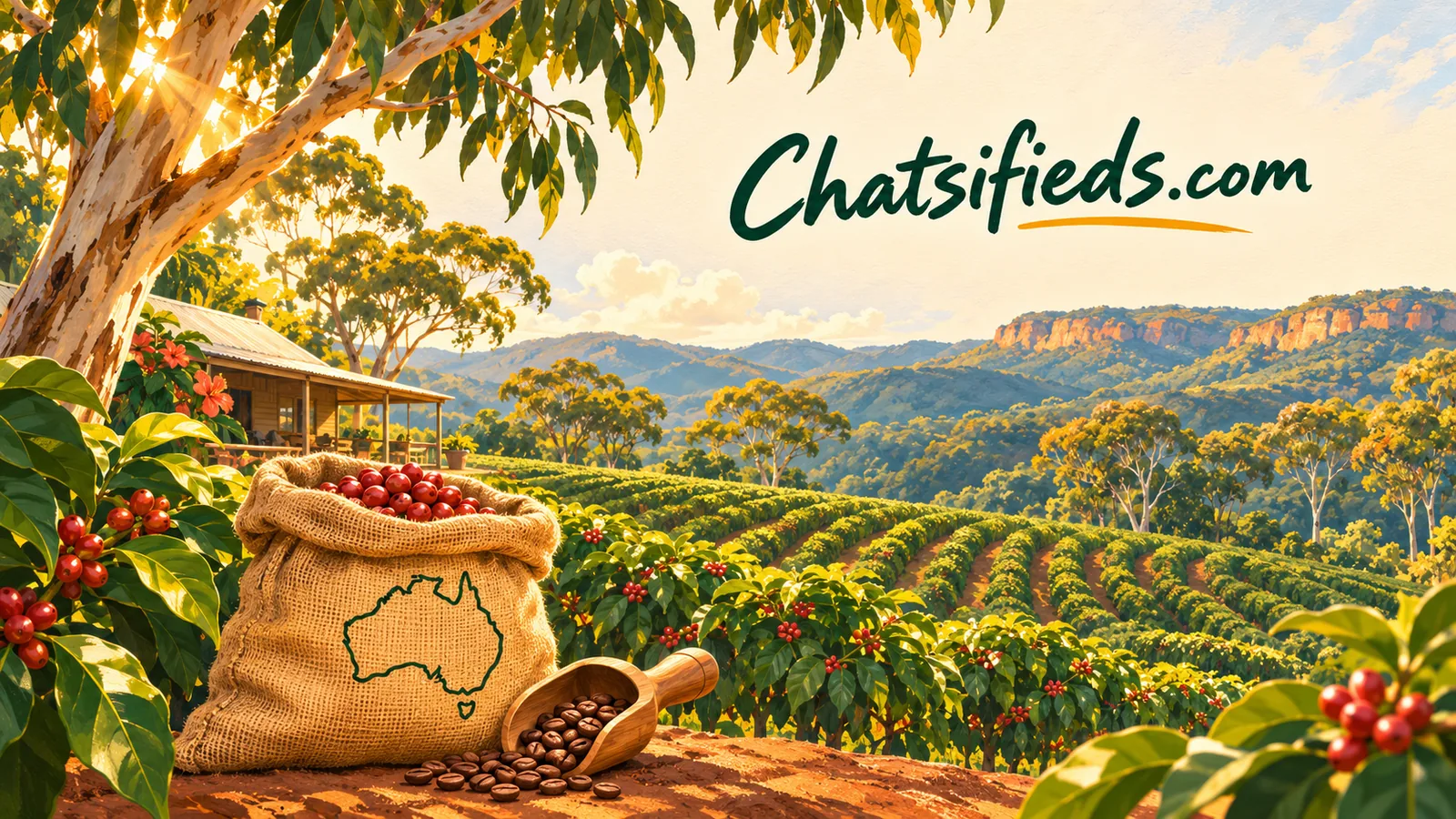
Coffee is grown in Australia, mainly in northern New South Wales and Queensland, but it is a small industry. AgriFutures Australia says about 99 per cent of the coffee Australians drink is imported. “Roasted in Australia” and “grown in Australia” are two different things, so ask both questions: where is it grown, and where is it roasted?
Understand the Australian context
AgriFutures Australia, a rural research body supported by government, says Australians drink roughly six billion cups of coffee a year. It also says about 99 per cent of the coffee is imported, mostly from Brazil, Colombia and Ethiopia, and that local production is under 300 tonnes a year. These figures come from one source at one point in time, and figures like this change, so treat them as a guide rather than an exact count.
Coffee is still grown here. AgriFutures says commercial coffee is grown mainly in Queensland and northern New South Wales. The first commercial plantation was near Mareeba in the late 1970s, and the Atherton Tablelands suit Arabica coffee. SBS Food names the same areas: the Byron Bay hinterland and the Northern Rivers in New South Wales, the area around Coffs Harbour, and the Atherton Tablelands near Mareeba in Queensland. SBS says there are roughly 50 growers in total. AgriFutures adds that early plantings have started in Western Australia.
This leads to a useful language point. Beans are grown in one place and roasted in another. Because almost all the coffee used in Australia is imported, a café that roasts its beans in your city is usually roasting coffee that was grown overseas. “Local roaster” does not mean “Australian-grown beans”. The label on the bag, or a question to the staff, is the way to find out.
Key words and phrases
- grown
- Where the coffee plants are farmed. This is the origin of the bean.
- roasted
- Where the green beans are heated to make them brown and ready to brew. This can be a different place.
- imported
- Brought into a country from another country.
- grower
- A farmer who grows coffee.
- plantation
- A large farm where one crop, such as coffee, is grown.
- region
- A part of a country, such as northern New South Wales or the Atherton Tablelands.
- origin
- The country or place where the coffee was grown.
- tonne
- A unit of weight. One tonne is 1,000 kilograms.
Conversation practice: asking where the beans are grown
Customer: Hi there. Is any of your coffee Australian-grown?
Staff: Not on today’s list, sorry. Most of the beans we use are grown overseas.
Customer: Okay. Where are the beans in this blend grown?
Staff: The bag says Brazil and Colombia. The label lists the countries on the back.
Customer: And where is it roasted?
Staff: Here in town. The roaster is only a few suburbs away.
Customer: So it’s roasted locally, but grown in another country?
Staff: That’s right. Roasted here, grown overseas.
Customer: Is Australian-grown coffee hard to find?
Staff: It’s a small industry, so you might need to look for it on purpose. Some coffee is grown in northern New South Wales and Queensland.
Customer: That’s interesting. I’ll ask around. For now, could I get a flat white, please?
Staff: Of course. Is that for here or takeaway?
- “Is any of your coffee Australian-grown?” is a clear, polite question. “Any of” is useful because the answer might be “some” or “none”.
- “Where is it grown?” and “Where is it roasted?” are two separate questions. Asking both avoids confusion.
- “You might need to look for it on purpose” means you will not find it by accident, so you have to search.
More useful phrases
- Is any of your coffee Australian-grown?
- Do you sell any coffee that was grown in Australia?Use it: When you want to ask about local farms at a café or roaster.
- Where are the beans grown?
- Which country or region did the coffee come from?Use it: When you want to know the origin of the coffee in a bag or a cup.
- Where is it roasted?
- Where were the beans roasted after they were grown?Use it: To check the roasting location separately from the growing location.
- Is it grown here or imported?
- Is this coffee from Australia or from another country?Use it: When a label gives only a roaster’s name.
- Which region is it from?
- Which part of the country did it come from?Use it: When the bag names a country and you want more detail.
- Do you know the grower’s name?
- Can you tell me which farm or farmer grew it?Use it: When a café talks about a specific farm.
- Thanks for explaining. That’s really helpful.
- I appreciate your answer.Use it: To end the conversation politely.
Common mistakes and better ways to say it
Less helpful: “Is this coffee Australian?”
Try instead: “Is this coffee grown in Australia, or just roasted here?”
“Australian” can mean grown, roasted or sold in Australia. The better question separates growing from roasting.
Less helpful: “You roast here, so the beans are from here.”
Try instead: “You roast here. Where are the beans grown?”
AgriFutures Australia says about 99 per cent of the coffee is imported, so beans roasted in Australia are usually grown overseas.
Less helpful: “Where is this coffee from?”
Try instead: “Which country and region are the beans from?”
“From” is vague. Naming country and region asks for the exact detail you want.
Less helpful: “Australia has no coffee farms, right?”
Try instead: “I thought most coffee was imported. Is some grown here?”
Coffee is grown here, mainly in northern New South Wales and Queensland, even though the industry is small. A question is more accurate and friendlier than a guess.
A small industry with a lot of curiosity
Australian café culture is famous, but the beans in your cup usually began their journey in another country. That is not a problem or a secret. It simply explains why café staff and roasters often talk about countries such as Brazil, Colombia and Ethiopia, and why a bag from an Australian grower can feel special.
If you are curious, ask politely and be ready for a short answer. A small café may not know every detail, and a bag may list only a country. You can also read the label, or look up the roaster’s website. Numbers and growing areas change over time, so treat the figures in this lesson as facts from named sources at one point in time. This lesson does not say that one kind of coffee is better than another. It helps you understand and ask.
Advertisement
Try it yourself
Look at a coffee bag or a café menu and find the origin. Write two questions: one about where the beans are grown and one about where they are roasted. Then practise the question “Is any of your coffee Australian-grown?” aloud, once to a friend and once to yourself in the mirror.
Phrase Wall practice: use this phrase
Where are the beans grown?
Say the example aloud, then try it in a real conversation. Discover more useful phrases and save your favourites to My Learning.
Quick check
Think about each answer first, then open “Show answer”. This is a self-check, not a scored quiz.
1. According to AgriFutures Australia, about how much of the coffee Australians drink is imported?
- About 10 per cent
- About 50 per cent
- About 99 per cent
Show answer
Answer: C. About 99 per cent. AgriFutures Australia says about 99 per cent is imported, mostly from Brazil, Colombia and Ethiopia.
2. Which areas does SBS Food name as coffee-growing areas in Australia?
- Northern Rivers, Coffs Harbour and the Atherton Tablelands
- Only Western Australia
- Only central Victoria
Show answer
Answer: A. Northern Rivers, Coffs Harbour and the Atherton Tablelands. SBS Food names the Byron Bay hinterland and Northern Rivers, the Coffs Harbour area and the Atherton Tablelands near Mareeba.
3. A café roasts coffee in your city. What does that tell you about where the beans were grown?
- They were definitely grown in your city
- Nothing for certain, so you should ask
- They were grown in Western Australia
Show answer
Answer: B. Nothing for certain, so you should ask. Roasting location and growing location can be different, so ask both questions.
4. Which question asks about growing, not roasting?
- Where is it roasted?
- Where are the beans grown?
- How long ago was it roasted?
Show answer
Answer: B. Where are the beans grown?. “Grown” refers to the farm and origin of the bean. “Roasted” refers to where the beans were heated.
Frequently asked questions
Is coffee really grown in Australia?
Yes. AgriFutures Australia says commercial coffee is grown mainly in Queensland and northern New South Wales, and early plantings have started in Western Australia. It is a small industry.
Where is Australian coffee grown?
SBS Food names the Byron Bay hinterland and Northern Rivers in New South Wales, the area around Coffs Harbour, and the Atherton Tablelands near Mareeba in Queensland. SBS says there are roughly 50 growers in total.
Does Australian-grown coffee have a Fairtrade Mark?
Not through Fairtrade Australia & New Zealand. It says Fairtrade focuses on disadvantaged producers worldwide and does not certify locally grown produce in Australia or New Zealand. Other labels exist, so ask the seller what a label means.
Do these numbers stay the same?
No. AgriFutures Australia and SBS Food published their figures at a particular time, and the industry changes. Use the numbers as a guide and check a current source if you need exact figures.
Chatsifieds Phrase Wall
Take two useful phrases into real Australian conversation.
Practise these related phrases, learn what they mean and build confidence before you use them in real life.
Phrase Wall & local business learning
Practise this English in real life
Explore useful Australian English on the Phrase Wall. Relevant businesses can support this lesson with a clearly labelled student offer or real-world practice opportunity.
Sponsorship is clearly labelled and never changes educational answers. Sponsored content policy.
Continue learning
- Café English hub
- Coffee Origins Explained: Country, Region, Farm and Lot
- How to Choose Coffee Beans in Australia: A Beginner’s Decision Guide
- Single Origin vs Blend Coffee: How to Read an Australian Café Menu
- Arabica vs Robusta Coffee Beans: What’s the Difference?
- Whole Beans vs Ground Coffee: Shopping English in Australia
Sources checked
These pages were read while writing this lesson. Links are external references, not sponsorships or endorsements.
- AgriFutures Australia: Brewing an Australian future, the rise of locally grown coffee
- SBS Food: Everything you need to know about Australian-grown coffee (2021)
- Fairtrade Australia & New Zealand: what Fairtrade does and does not certify
This is an English-learning article. Rules, menus and café habits change, so check current official guidance and ask the café for the details that matter to you.